Cold weather hunting gear: feet, hands, head and heat
Cold weather hunting gear beyond the jacket: how to keep feet, legs, hands and head warm on a long winter sit, and when heated clothing is worth it.
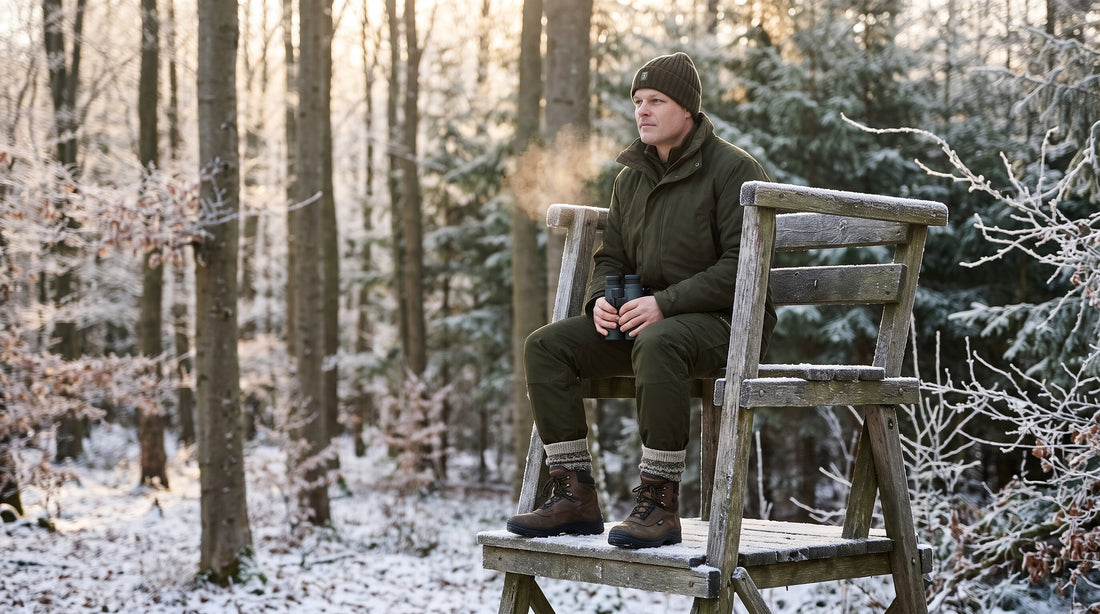
- On a cold stand you lose comfort first at the feet, the thighs, the hands and the head, not at the chest.
- Insulate those four zones and add heat where you sit still longest: the legs and the lower back.
- Pack the warm pieces for the walk in and put them on as soon as you sit, before the cold arrives.
Good cold weather hunting gear is mostly about the parts of the body that get cold first. A warm jacket keeps your core comfortable, but on a long winter sit it is cold feet, stiff fingers and chilled thighs that send you home before last light.
Our guide to layering for the winter stand covers base, mid and outer layers. This guide goes one step further: the gear for feet, legs, hands and head, and when heated clothing earns its place in your pack. Everything here is in our winter stand gear collection.
What cold weather hunting gear do you need beyond a jacket?
Beyond a jacket, you need warm socks and boots, insulated or heated trousers, two pairs of gloves and a hat that covers the ears. These are the zones where blood flow drops when you sit still, so they cool down long before your chest does.
A checklist for the cold sit:
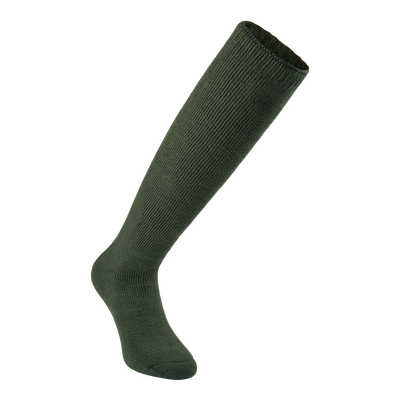
- Feet: thermal socks with a long leg and roomy, insulated boots.
- Legs: winter trousers with insulation, or heated trousers on the coldest days.
- Hands: thin gloves for handling binoculars, warm gloves or mitts for the wait.
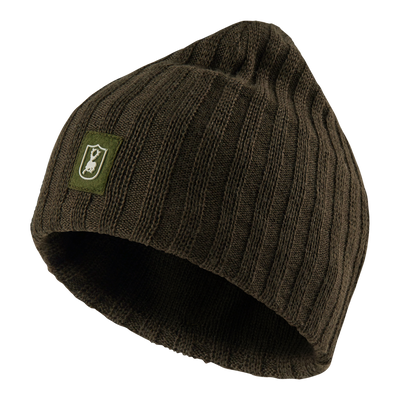
- Head and neck: an insulated beanie and a neck gaiter.
- Seat: something between you and the cold wooden bench.
Feet: socks first, then boots
Warm feet start with the right socks, not the thickest boots. Thermal socks hold warmth around the foot, and a knee-high length carries it up the calf, which matters when you sit with your legs bent for hours.
Two common mistakes make feet cold. The first is tight boots: a thick sock squeezed into a tight boot cuts circulation and feels colder than a thinner sock with room to move. The second is damp: if you sweat on the walk in, the sock cools as soon as you stop. Change into a dry pair at the stand on very cold days, or walk in slower.
Legs and lower back: where heated hunting clothing helps most
Heated clothing helps most on the thighs and the lower back, because those areas press against a cold seat and barely move during a sit. Heated trousers with elements on the thighs and lower back, and several heat levels, let you add warmth exactly there.
Use the heat in steps. Walk in with it switched off, so you do not sweat. Switch it on when you settle, start on a low level and turn it up as the temperature drops towards evening. Heated garments run on a power bank, so charge it the night before and keep it in an inside pocket on frosty days.
For the core, a heated vest works on the same principle. We explain what to check before you buy one in Heated vest: what to look for.
Warm up before you get cold
Put on the hat, the warm gloves and switch on any heated layer the moment you sit down. Getting warm again once you are chilled takes far longer than staying warm.
Hands and head: small items, big difference
The simplest way to keep hands warm on a stand is to carry two pairs of gloves. A thin, quiet fleece glove lets you lift binoculars and adjust your gear without noise. A warmer pair or a mitt goes on for the long wait.
The head loses warmth quickly when it is exposed, and cold ears are hard to ignore. An insulated knitted beanie that covers the ears is a better choice for a winter sit than a cap. Add a neck gaiter to close the gap between collar and hat, where wind gets in.
How to pack cold weather gear for the stand
Pack the warmest pieces and wear the lightest ones on the walk in. A small checklist for the pack: warm gloves or mitts, beanie, neck gaiter, a dry pair of socks on very cold days, a charged power bank for heated layers and a seat cushion. At the stand, put everything on in one go, then sit still.
Questions hunters ask
Are heated clothes worth it for stand hunting?
They are most useful on long, still sits in hard frost, when insulation alone is not enough. For short sits or mild winter days, good socks, insulated trousers and a warm hat usually do the job.
How long should hunting socks be for winter?
For the stand, a knee-high length works well, because it keeps the calf warm as well as the foot. Shorter socks are fine for walking hunts and milder days.
Why do my feet get cold even in warm boots?
Usually because the boots are too tight with thick socks, or because your socks got damp from sweat on the walk in. Leave room for the toes to move and keep the feet dry.
Put together the pieces for your next cold sit from our winter stand gear collection.
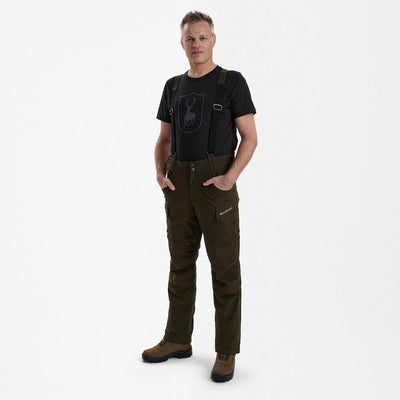
Insulated, silent layers for cold-weather stand hunting — stay warm through long, motionless winter sits on the high...